

How To Make A Animal Cell Model Materials
Introducing variation into learning for older kids is really important; after all, why should younger kids have all the fun?
Creating a plant cell model is not simply a fun way of learning this important part of the science curriculum, but information technology as well helps to solidify their learning. Visual and kinetic learners, in particular, will really benefit from making the model in this scientific discipline activity.
The first affair to learn near plant cells is what makes them different from an creature jail cell. While all cells have a prison cell membrane, cytoplasm, nucleus, mitochondria and ribosomes, plant cells have iii distinguishing features not constitute in animal cells - a jail cell wall, vacuole and chloroplasts, which are needed for the process of photosynthesis. Make sure you include these in your model plant cell.
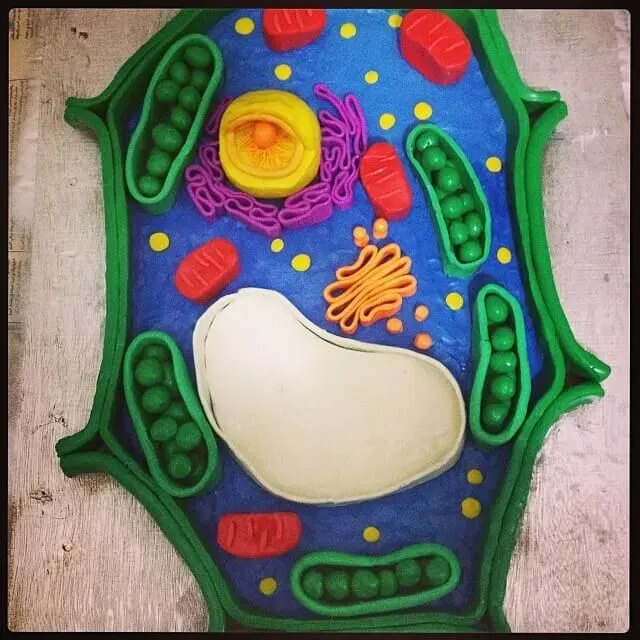
What To Include
Membrane: Controls any movement of substances going into and out of the plant cell.
Cytoplasm: This is jelly-like - chemic reactions happen here.
Nucleus: Controls what goes in the cell. It also contains the establish cell'south genetic material.
Mitochondria: This is where respiration happens in the establish prison cell.
Prison cell wall: This tough wall is made of cellulose. It helps to support the plant jail cell.
Vacuole: This contains prison cell sap. This helps to make the establish cell firm.
Chloroplasts: Carry photosynthesis - they absorb light from the sun, and use it, with carbon dioxide and water to produce the food for the plant.
If you want to extend the learning and go across KS3 into the realms of GCSE and A-level, you could also include these cell parts:
Ribosomes: This is where protein synthesis happens.
Mitochondria: These organelles* have enzymes for respiration. This is where well-nigh energy from respiration is released.
Golgi appliance: This stores and modifies proteins to have on sure functions and get them ready to exist transported to other parts of the prison cell. This sack of flattened sacs sits near the nucleus.
Endoplasmic reticulum: This is a continuous membrane arrangement that creates flattened sacs within the cytoplasm. Information technology is of import for the process of folding, synthesis, modification, and transport of proteins.
*Organelles are specialised structures independent within a living cell.
We've suggested 3 means to brand a plant cell, and so hopefully, there will be something here you can try without having to get out and buy lots of extra materials.
What Is Photosynthesis?
Green plants use a process called photosynthesis to make their ain food.
Photosynthesis uses sunlight, h2o, chlorophyll, and carbon dioxide gas (CO2).
Chlorophyll is found in all light-green plant, concentrated in the leaves. The plants get water from soil and carbon dioxide from the air.
The chlorophyll absorbs the free energy from sunlight, and this free energy is used to convert carbon dioxide and water into sugars (nutrients) and oxygen. Whatsoever sugars not used past the plant are stored, while the oxygen is released into the air.
The process of photosynthesis means green plants are essential for humans and other animals, as they provide nutrient, and produce the oxygen nosotros need to breathe.
The equation for photosynthesis is: Carbon dioxide + Water → Glucose + oxygen.
Lunchbox Model Plant Prison cell
Y'all will need:
Cell membrane - A plastic lunch box, Tupperware box or water ice foam tub
Cell wall - Cling flick
Chloroplasts - Some frozen peas/or some light-green plastic beads
Vacuole - A sealable snack/freezer bag filled with water (a water snake/water wiggly toy would do the task
Nucleus - A grape, olive, ping pong ball or roller ball from a gyre-on deodorant
Cytoplasm - Greenish food colour in a jug of water or wallpaper paste
Method:
1. Line your box with the cling motion-picture show, making certain yous leave plenty over the sides to avoid spillage.
2. Add your h2o-filled bag or water snake toy.
3. Pour in some frozen peas/beads – about two cups' worth.
4. Add together the grape/olive/ ping pong ball/rollerball.
5. Advisedly pour the coloured water or wallpaper paste into the box.
Your plant prison cell model is complete!
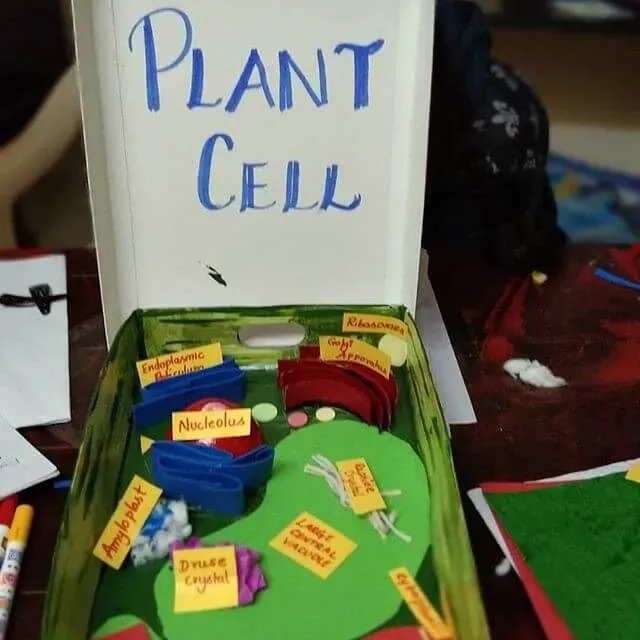
Household Items Model Of A Found Jail cell
You lot volition demand:
Cell wall - A cardboard box or cream lath to make sides and base
Green pigment
Jail cell membrane - Yellow carte du jour or white carte du jour and yellow paint
Cytoplasm - Black pigment or black foam board. Yous could use bubble wrap, painted blackness.
Nucleus - Lawn tennis ball
Bluish paint
Hot mucilage gun and glue
Chloroplasts - Cream packing peanuts or cheesy puff crisps (annihilation like Wotsits), small green sweets, such every bit Skittles
Vacuole - Ball of yarn or garden twine - must exist long rather than round
Method:
Paint the within of your box green - or brand a box shape from cream board.
The base must be black - either use foam board or just paint the bottom of the box - this is the cytoplasm.
Line the sides with yellow card - painted if you lot tin't get yellow. This is the cytoplasm.
Cut a tennis ball in half and paint with some poster pigment or emulsion – any you lot have to hand. Stick to the bottom of the box using a hot glue gun (adult supervision required)
For the chloroplasts accept some packing peanuts (or some cheesy puff/Wotsits) and slice in half lengthways. Stick them to the bottom of the box with the flat side upwards. Glue three of your small dark-green sweets to them.
Vacuole - Have a long ball of yarn or garden twine, pigment over with some polyurethane varnish if you have information technology and stick it to the base of operations.
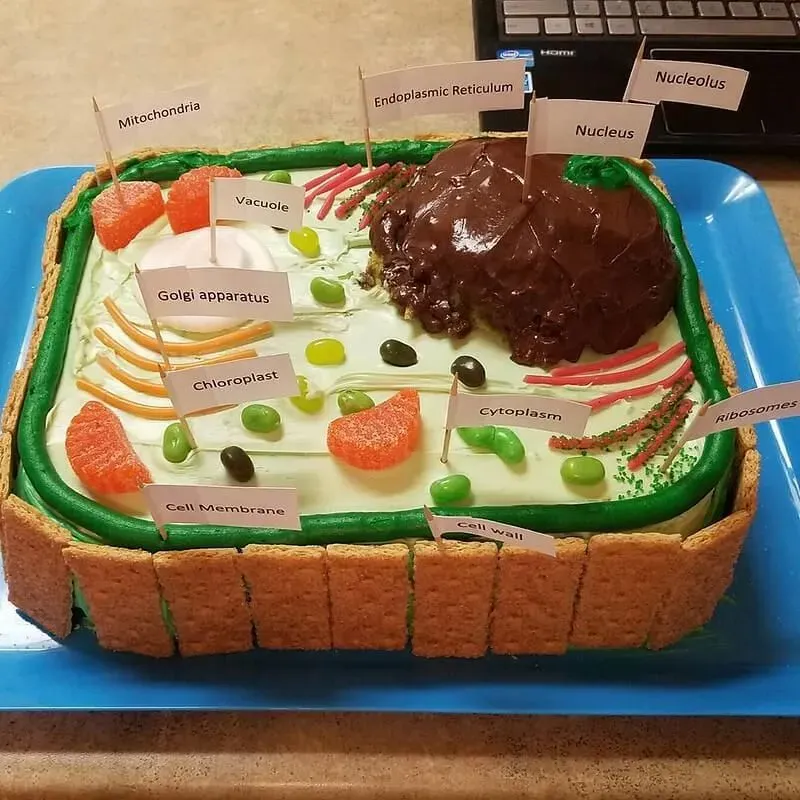
Edible Found Prison cell Model
You lot volition need:
Marshmallows
Crisped rice cereal
Nucleus - Digestive biscuit (or any other round biscuit)
Icing made from icing sugar
Frosting fabricated from icing saccharide and butter
Blueish and yellow nutrient colouring
Chloroplasts - Light-green small sweets and cream bananas
Foursquare (preferably) cake baking tin
Method:
1. Gently cook some marshmallows in the microwave – bank check regularly to make certain they don't burn down.
2. When they are gooey plenty, mix in the cereal, making sure it is all coated in marshmallow.
3. Printing the mixture into the greased base of operations of a square cake baking can.
4. Put in the fridge to fix.
5. Once set, take out and use bluish frosting to coat the edges of the cake tin. This is the jail cell membrane.
6. Take a digestive biscuit (the nucleus), comprehend in blue icing and stick to the crispy base with some more icing.
vii. For the chloroplasts in the cell, stick a couple of foam bananas to the base of operations with icing, with their flat side facing up. Then stick some green sweets forth the elevation side.
8. Use icing to brand a long 'puddle ' shape for the vacuole.
ix. Capeesh its artistic and scientific beauty of your plant prison cell model – and then swallow it!
Now you take fabricated your constitute cell models, why not have a go at an animal cell model, using a dissimilar method?
Source: https://kidadl.com/education-learning/how-to-make-a-plant-cell-model
Posted by: hardinander1983.blogspot.com
0 Response to "How To Make A Animal Cell Model Materials"
Post a Comment